
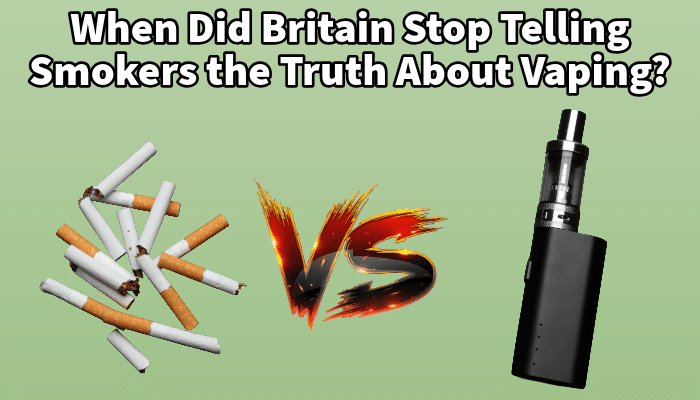
For years, the UK’s message to smokers was relatively straightforward.
Smoking is extraordinarily harmful. Vaping is not harmless, but it exposes users to fewer toxins than smoking and can help adults move away from cigarettes.
Somewhere along the way, that message became considerably harder to hear.
Ask a smoker in Britain today whether vaping is less harmful than smoking and there is now a disturbingly high chance that they will give you the wrong answer. According to Action on Smoking and Health’s 2026 survey, 52% of adults who currently smoke believe vaping is either equally harmful or more harmful than smoking. Only 29% believe vaping is less or a lot less harmful.
That is more than an unfortunate misunderstanding.
It represents a fairly spectacular failure of risk communication.
Nobody responsible should tell people that vaping is harmless. It isn’t. People who do not smoke should not start vaping, children should not vape, and legitimate questions remain about the long-term effects of inhaling vape aerosol.
But none of those statements requires us to pretend that the relative risks of smoking and vaping are somehow a mystery.
They aren’t.
The NHS continues to state that nicotine vaping is less harmful than smoking and that people who switch completely reduce their exposure to toxins associated with cancer, lung disease, heart disease and stroke. Its updated July 2026 guidance describes e-cigarettes as likely to be “far less harmful” than cigarettes and confirms that vaping can help people quit smoking for good.
At almost exactly the same time that smokers appear to be becoming less certain about that distinction, the scientific evidence supporting vaping as a smoking cessation tool is becoming stronger.
The latest Cochrane review, published in August 2026, examined 80 randomised controlled trials involving 29,861 participants and concluded that nicotine e-cigarettes help more people stop smoking than conventional nicotine replacement therapy such as patches and gum.
Meanwhile, a working group within the international Society for Research on Nicotine and Tobacco has published recommendations in JAMA advising US clinicians to include nicotine e-cigarettes in evidence-based conversations with adults who smoke and want to quit.
So we find ourselves in a peculiar position.
The evidence is becoming clearer.
The public message is becoming muddier.
And the people who potentially have the most to gain from understanding the difference are increasingly getting the wrong impression.
Table of Contents
We Have Become Very Good at Talking About Everything That Is Wrong With Vaping
Think about the vaping stories that have dominated British headlines over the last few years.
Youth vaping.
Disposable vapes.
Bright packaging.
Sweet flavours.
Illegal products.
Environmental waste.
Underage sales.
High street vape shops.
Vapes in schools.
All are legitimate subjects for public debate. Some require sensible regulation. Illegal retailers should face enforcement, businesses selling nicotine products to children should face consequences, and nobody within the responsible vaping industry benefits from a market where non-compliant products are allowed to flourish.
But something has happened while those conversations have intensified.
We have become exceptionally good at explaining what we don’t want vaping to be while becoming strangely reluctant to remind people what vaping was originally supposed to help achieve.
Helping adults stop smoking.
That purpose hasn’t disappeared simply because vaping policy has become more complicated.
The NHS still describes nicotine vapes as one of the most effective stop-smoking products. It advises smokers that using the correct nicotine strength can help manage withdrawal symptoms and cravings, and that specialist vape shops and local Stop Smoking Services can provide advice.
The scientific evidence has not quietly collapsed behind the scenes either.
Quite the opposite.
The Latest Evidence on Vaping and Quitting Smoking Is Stronger, Not Weaker
On 26 August 2026, Cochrane published the latest update to its living systematic review of electronic cigarettes for smoking cessation.
Cochrane reviews matter because they are not individual studies selected because their findings happen to support one side of an argument. Systematic reviews attempt to gather and assess the wider body of relevant evidence, considering study quality and certainty before reaching conclusions.
The latest update included 80 randomised controlled trials involving 29,861 adults who smoked. Nine trials were new to this particular update. Researchers found that more people successfully stopped smoking for at least six months when using nicotine e-cigarettes than when using nicotine replacement therapy such as patches or gum.
In practical terms, its analysis estimates roughly four additional people quitting smoking for every 100 using nicotine e-cigarettes rather than nicotine replacement therapy.
Four people might not sound dramatic when reduced to a statistic.
Scale it across hundreds of thousands of quit attempts and it starts looking rather more important.
And remember what is being compared.
This isn’t vaping versus doing absolutely nothing.
It is vaping versus established smoking cessation products specifically designed to help people quit.
That makes the deterioration in public understanding particularly frustrating.
At the very moment evidence is strengthening that vaping can be an effective route away from smoking, more smokers are apparently becoming convinced that the alternative may be just as dangerous as the cigarettes they are trying to leave behind.
If you genuinely believe switching will make little or no difference to your health, why would you go through the inconvenience of switching at all?
The Smoking Part of the Comparison Is Disappearing
Perhaps the biggest problem with the modern vaping debate is that vaping is increasingly discussed as though it exists entirely by itself.
A potential risk is identified and the comparison immediately becomes:
Vaping versus not vaping.
For a non-smoker, that is entirely appropriate.
If somebody doesn’t smoke cigarettes and doesn’t currently use nicotine, there is no health reason for them to begin vaping.
But that is not the decision facing an adult smoker.
Their comparison is:
Continuing to smoke versus switching completely to vaping.
That is a fundamentally different question.
Cigarettes burn tobacco. That combustion creates thousands of chemicals, many of which are poisonous and dozens of which are known to cause cancer. The NHS points out that two particularly damaging components of cigarette smoke, tar and carbon monoxide, are not produced by e-cigarettes.
Vapes work differently. Rather than burning tobacco, they heat an e-liquid to create an aerosol.
That does not make the resulting aerosol harmless.
It does, however, make the toxic exposure fundamentally different from inhaling the products of tobacco combustion.
This is why the NHS can simultaneously say that vaping isn’t risk-free and that it is less harmful than smoking.
Those statements do not contradict one another.
In fact, understanding that both can be true is central to understanding relative risk.
Unfortunately, nuance isn’t particularly fashionable.
“Not Harmless” Does Not Mean “Just as Harmful”
This may be one of the most damaging linguistic shortcuts in the entire debate.
You will often hear somebody say:
“But vaping isn’t harmless.”
Correct.
Neither is drinking alcohol.
Neither is spending too much time in the sun.
Neither is driving a car.
Neither is eating a poor diet.
Neither is breathing polluted city air.
Public health has never required something to be completely harmless before recognising that one behaviour can carry substantially less risk than another.
Yet when vaping is discussed, “not harmless” has increasingly started functioning as though it means “therefore essentially as dangerous as cigarettes”.
That simply doesn’t follow.
Risk exists on a spectrum.
The important question for an adult who currently smokes isn’t:
“Is vaping completely harmless?”
It is:
“Would switching completely from cigarettes to vaping reduce my exposure to harmful substances?”
Current NHS guidance says that it would.
That doesn’t mean every uncertainty has been resolved. Long-term vaping data naturally cannot stretch back as far as evidence about combustible cigarettes, because modern e-cigarettes have not existed for anything like as long.
Acknowledging uncertainty is good science.
Turning that uncertainty into the suggestion that we therefore have no idea whether cigarettes are more harmful is not.
Misinformation Thrives When the Comparison Goes Missing
There is another reason public understanding has become so confused: vaping research has to survive the journey from scientific paper to news story to headline to social media post.
Quite a lot can happen on the way.
“Vaping causes…”
“Scientists discover…”
“Study links e-cigarettes to…”
“Experts warn…”
By the time somebody sees the claim while scrolling Facebook, X, Instagram or TikTok, most of the information required to interpret the research may have disappeared.
What population was studied?
How large was the study?
Was it observational or randomised?
Did the researchers find an association or demonstrate causation?
Were the participants current smokers?
Were they former smokers?
Were they using cigarettes and vapes simultaneously?
What products were being used?
Were those products comparable with legal UK-regulated vaping products?
What was the control group?
Was vaping being compared with smoking, or with people who had never smoked or vaped?
What was the absolute risk rather than simply the relative increase?
These aren’t pedantic objections designed to dismiss inconvenient findings.
They are questions that determine what a study actually tells us.
Imagine, for example, finding higher rates of a particular health problem among people who vape than among people who have never smoked.
That could be important.
But if a large proportion of the people vaping previously smoked cigarettes for 10, 20 or 30 years, their smoking history is rather relevant to interpreting what you are seeing.
That doesn’t automatically invalidate the research.
It means context matters.
Social media is exceptionally good at removing context.
Fear Travels Faster Than Nuance
The modern attention economy creates an obvious problem for communicating complicated health evidence.
“Researchers identify an association requiring further investigation, although causality has not been established and previous smoking history may be an important confounding factor” is not a particularly irresistible headline.
“VAPING DESTROYS YOUR LUNGS” is considerably easier to share.
The original research doesn’t necessarily need to be bad.
Often it isn’t.
A study can contain appropriate limitations and cautious conclusions. A journalist then simplifies those conclusions. Somebody screenshots the headline. Another account reposts the screenshot with its own interpretation. A video creator repeats that interpretation in 20 seconds.
Within a few iterations, a cautious scientific observation can transform into something that sounds remarkably like established fact.
Correcting it afterwards is much harder.
The correction usually requires explanation.
The alarming claim required six words.
And repetition itself has power.
A smoker doesn’t need to believe every frightening vaping story they encounter. If they repeatedly see the words “vaping” alongside “cancer”, “heart disease”, “lung damage”, “chemicals” and “danger”, an overall impression begins to form.
Eventually, “I’ve seen loads of things saying vaping is bad” becomes its own kind of evidence.
Which brings us to perhaps the most stubborn example of all.
New arrivals
-
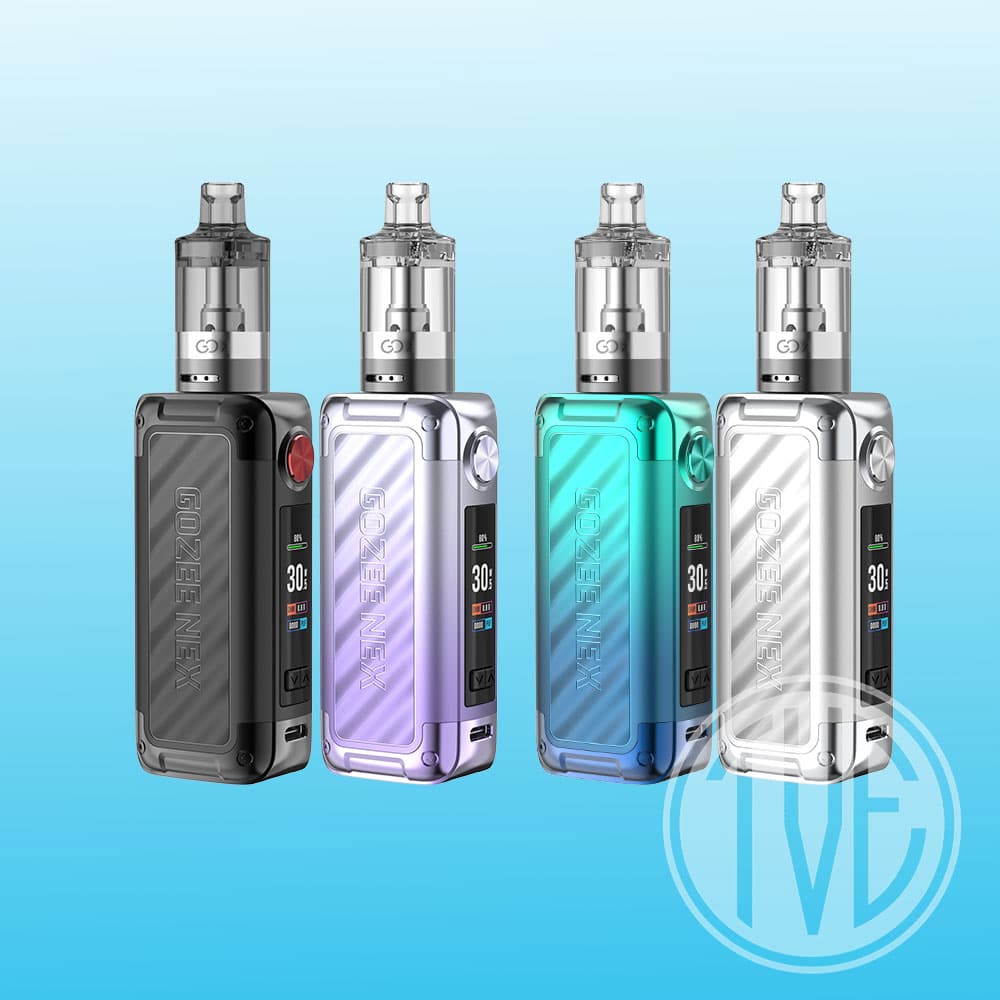

Innokin GOZEE NEX Vape Kit
£34.99 -
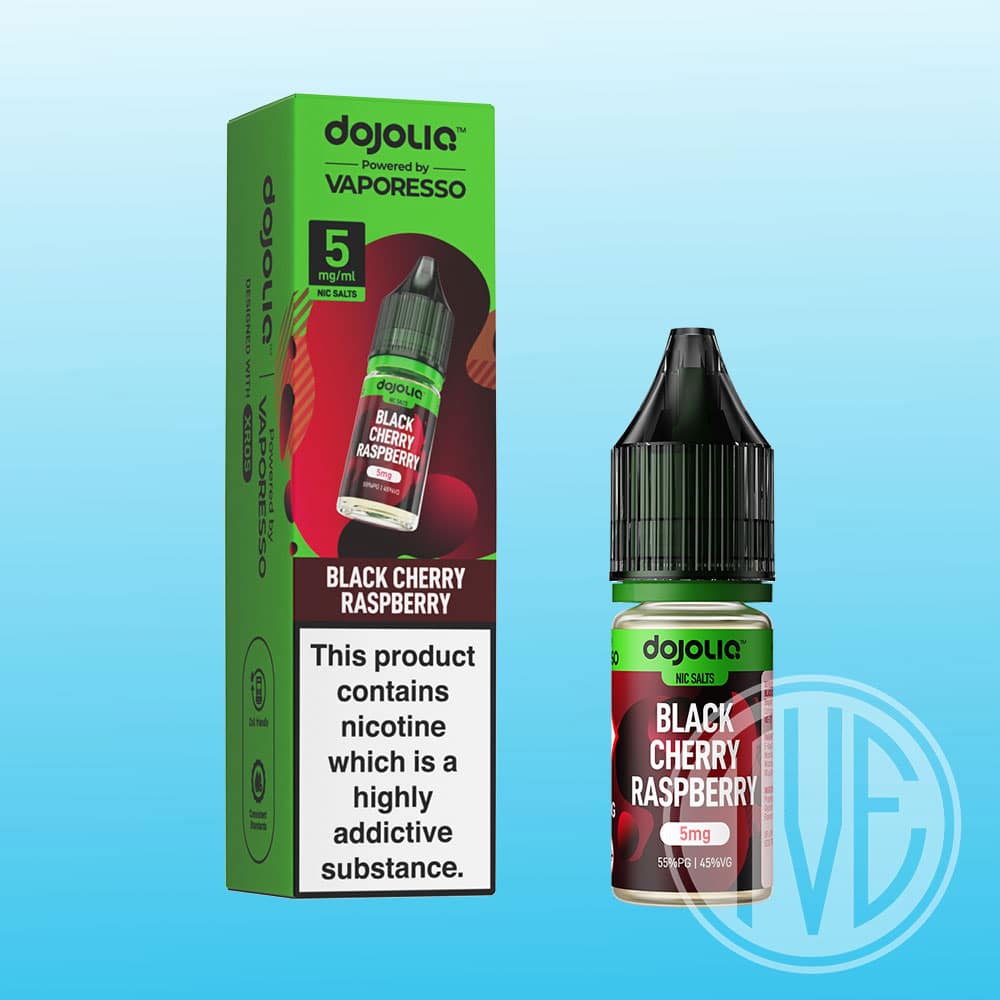 ANY 10 FOR £21ANY 4 FOR £10
DojoLiq 5mg Nic Salt E-Liquid
£2.99 -
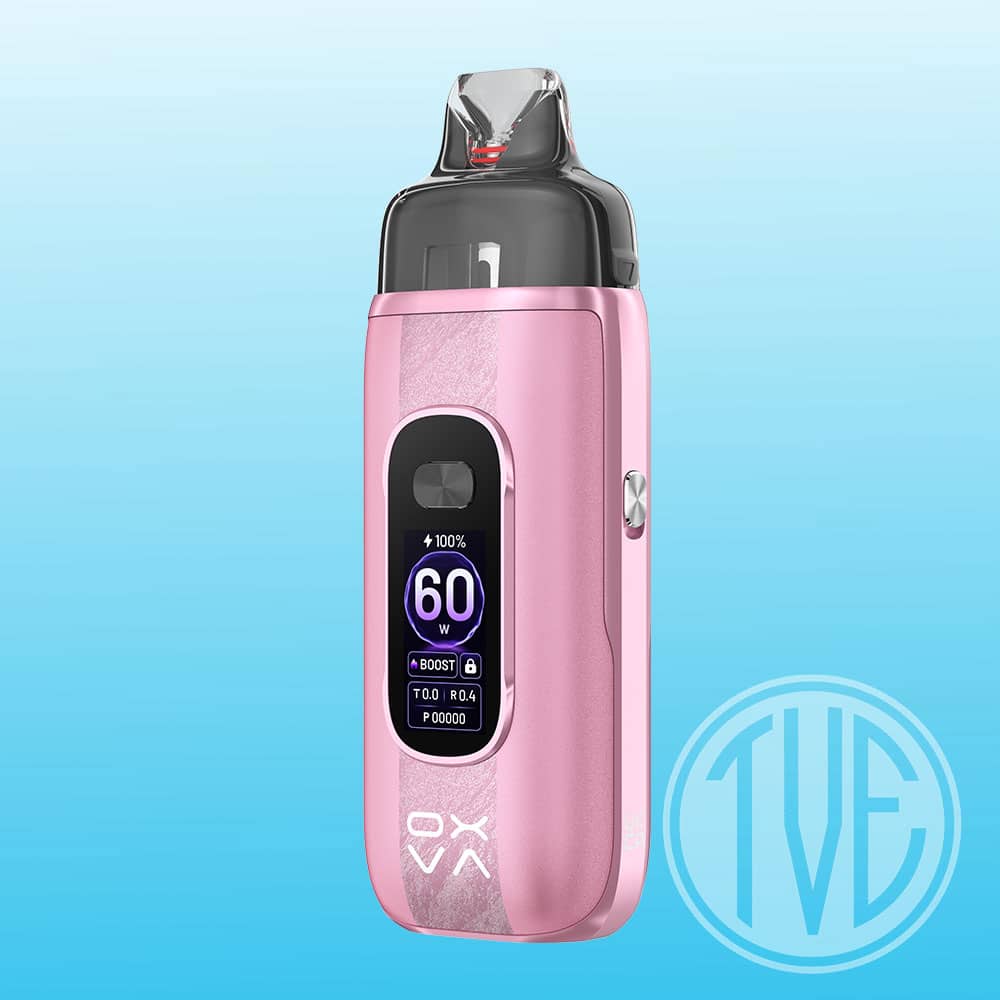
Oxva Vprime 2 Vape Kit
£29.99 -
 ANY 10 FOR £21ANY 4 FOR £10
Kuro (By Riot) Nic Salt Vape Juice 10ml – 10mg
£2.99 -
ANY 10 FOR £21ANY 4 FOR £10
Kuro (By Riot) Nic Salt Vape Juice 10ml – 20mg
£2.99 -
IVG PRO 12 Refill Pod 2ml 20mg
£6.49 -


Doozy Vape Seriously Slushy Mixed Berry 0mg 100ml Shortfill
£10.99 -

Vaporesso XTank T Glass Tube
£2.99 -

Voopoo Argus G3 Vape Kit
£24.99
Yes, People Are Still Talking About “Popcorn Lung”
Years later, “popcorn lung” continues to appear in vaping comment sections with extraordinary regularity.
Somebody mentions vaping.
Somebody else replies:
“Enjoy the popcorn lung.”
Argument apparently concluded.
There is just one slight problem.
The NHS explicitly addresses the claim in its vaping guidance and states that vaping does not cause “popcorn lung”. The condition, bronchiolitis obliterans, became associated with occupational exposure to diacetyl, a chemical once used in some flavourings. Diacetyl is banned as an ingredient in UK-regulated nicotine vapes and e-liquids.
Yet the claim survives.
That tells us something important about misinformation.
Information does not disappear merely because it has been corrected.
Catchy misinformation can enjoy an extraordinarily long afterlife because people remember the memorable claim without ever encountering, remembering or believing the boring correction.
“Fake news” doesn’t quite capture the entire problem either.
Some misinformation is completely fabricated, certainly.
But much of what creates confusion around vaping is more subtle.
A genuine study stripped of its limitations.
An association presented as causation.
Animal or laboratory findings reported without explaining their applicability to normal human use.
A relative risk presented without the absolute risk.
Research involving people with substantial smoking histories presented as though vaping appeared in their lives in isolation.
A headline technically connected to the paper beneath it but written in a way that leaves readers with a substantially stronger conclusion.
None requires somebody to invent an entire story from nothing.
They simply require context to disappear.
Compare That With What Cochrane Actually Has to Do
There is something almost comical about the imbalance.
On one side, researchers spend years conducting trials.
Systematic reviewers then identify relevant studies, assess methodologies, compare interventions, examine potential bias, calculate pooled results, judge certainty and continually update their conclusions when new evidence becomes available.
The August 2026 Cochrane update included 80 randomised controlled trials and 29,861 participants.
On the other side, somebody posts:
“Vapes are worse than cigarettes mate.”
Guess which one takes less time to consume.
The job of good health communication isn’t to complain that the public hasn’t read thousands of pages of research.
Most people understandably never will.
The job is to make the important conclusions accessible without distorting them.
And if 52% of smokers now believe vaping is as harmful as or more harmful than smoking, something clearly isn’t working.
Are We Actually Arguing About Science, or About Values?
This is where the debate gets more interesting.
An editorial published in JAMA in July 2026 by smoking-cessation researcher Jamie Hartmann-Boyce argues for distinguishing evidence from values when discussing e-cigarettes and smoking cessation.
That distinction matters enormously.
What outcome are we actually trying to achieve?
Imagine an adult who has smoked for 20 years.
They switch completely to vaping.
They no longer smoke cigarettes, but they continue using nicotine through a vape.
Is that a success?
The answer depends partly on the objective.
If your objective is that nobody should consume nicotine in any form, you may regard it as incomplete. The individual remains dependent on nicotine.
If your immediate objective is reducing the disease and premature death caused by combustible tobacco, the same outcome looks very different.
The cigarette smoke has gone.
That doesn’t make nicotine dependence desirable.
It does mean that “still uses nicotine” and “still smokes cigarettes” are not interchangeable health outcomes.
Hartmann-Boyce’s distinction between evidence and values is therefore extremely useful.
People are entitled to believe that a nicotine-free life is preferable.
But that is not the same statement as claiming that continuing to smoke and switching completely to vaping carry equivalent risks.
One is a judgement about an ideal outcome.
The other is a scientific question.
We shouldn’t confuse them.
Harm Reduction Has Never Required Perfection
We accept harm reduction almost everywhere else.
Seat belts do not make driving harmless.
Cycle helmets do not prevent every cycling injury.
Sunscreen does not make excessive UV exposure healthy.
Condoms do not eliminate every risk associated with sex.
Food safety procedures cannot eliminate every possibility of foodborne illness.
We use them because reducing risk matters even when eliminating risk entirely isn’t realistic.
Smoking cessation should not suddenly require a completely different philosophical standard.
Of course, the ideal outcome for somebody who smokes may eventually be to use neither cigarettes nor vaping products.
The NHS itself provides advice for people who have successfully moved away from cigarettes and later want to reduce or stop vaping.
But sequencing matters.
For somebody currently smoking, getting away from combustible tobacco is the immediate priority.
Demanding that every smoker simultaneously eliminate cigarettes, vaping and nicotine may sound wonderfully pure as a policy aspiration.
It may be considerably less useful to the person who has tried to quit six times and keeps returning to a packet of cigarettes.
The Clinical Conversation Is Changing
The debate isn’t confined to Britain.
In July 2026, JAMA published recommendations developed by a working group within the Treatment Research Network of the international Society for Research on Nicotine and Tobacco.
The recommendations are intended for US clinicians, so they should not be confused with NHS or UK clinical guidance.
But they are significant.
The authors recommend integrating nicotine e-cigarettes into conversations about the risks and benefits of evidence-based pharmacological treatments for smoking cessation. The paper also addresses misconceptions and provides practical guidance clinicians can discuss with adults interested in using e-cigarettes to quit smoking.
Perhaps most importantly, the approach is patient-centred.
The question isn’t simply:
“What quitting method would we ideally like this smoker to choose?”
It is:
“What evidence-based option is this person actually willing and able to use to stop smoking?”
That sounds like a small distinction.
In practice, it is enormous.
Smokers Don’t Behave Like Research Flowcharts
Real-life smoking cessation is messy.
Someone might visit their GP determined to quit.
Someone else might contact a local Stop Smoking Service.
Another person might buy a vape because their partner successfully switched.
Someone might walk into a specialist vape shop with absolutely no idea what nicotine strength they need.
Another smoker might begin vaping without seriously intending to quit, realise they have gone from 20 cigarettes a day to five, and eventually stop buying cigarettes altogether.
Public health interventions are easiest to measure when they look like interventions.
Real life rarely cooperates.
This is one reason practical access and informed advice matter.
A product can be effective in research and still fail an individual if they don’t know how to use it.
A smoker accustomed to a substantial daily nicotine intake who buys an unsuitable device with an inadequate nicotine strength may conclude that vaping “doesn’t work” because they remain desperate for a cigarette.
The NHS specifically advises people to choose an e-liquid with enough nicotine to manage withdrawal symptoms and cravings. It also identifies specialist vape shops and Stop Smoking Services as places where smokers can seek advice.
That practical detail is easy to overlook.
And That Brings Us to Britain’s “Vape Shop Problem”
The phrase “vape shop” has acquired some extraordinary baggage.
A specialist vape retailer was once relatively easy to understand.
An adult smoker could walk in, explain what and how much they smoked, discuss different devices and nicotine strengths, ask questions and leave with something intended to replace cigarettes.
Today, the phrase is frequently bundled together with declining high streets, illegal products, youth vaping, questionable retailers and antisocial behaviour.
Sometimes criticism is justified.
Retailers selling illegal products or selling to children deserve enforcement. Responsible vape businesses have every reason to support action against traders who ignore the rules because those businesses damage consumer confidence in the entire sector.
But there is an obvious danger in treating every specialist vape retailer as inherently suspicious.
The NHS itself continues to tell smokers that specialist vape shops can advise them about appropriate products, devices and nicotine strengths.
There is quite a disconnect between that message and a political or cultural conversation that increasingly portrays “vape shops” as something communities would ideally eradicate.
A supermarket shelf cannot ask what you currently smoke.
An online product page cannot see that you’ve chosen a nicotine strength completely unsuitable for your previous cigarette consumption unless you know to seek advice.
A knowledgeable specialist can explain why your first device feels unsatisfying, why you’re still craving cigarettes, how different pod resistances behave, how to use the device correctly and why switching completely matters.
At The Vape Experts, we believe responsible specialist vaping retail should be about precisely that: helping adult smokers and existing vapers make informed choices, supplying compliant products and providing straightforward information rather than pretending vaping is something it isn’t.
It isn’t for children.
It isn’t for non-smokers.
It isn’t harmless.
But for an adult smoker looking for an alternative to cigarettes, it can play a very different role.
On sale products
-
Oxva NEXLIM GO Vape Kit
Original price was: £14.89.£11.99Current price is: £11.99. -
Vaporesso XROS 5 Mini Kit
Original price was: £16.49.£14.99Current price is: £14.99. -
Vaporesso XROS 5 Kit
Original price was: £21.99.£18.99Current price is: £18.99. -
Vaporesso Vibe Vape Kit
Original price was: £23.99.£14.99Current price is: £14.99. -
Vaporesso Vibe SE Vape Kit
Original price was: £9.99.£6.99Current price is: £6.99. -
Dojo Blast 2000 Go Replaceable Pod 20mg by Vaporesso
Original price was: £3.99.£1.99Current price is: £1.99. -
Dojo Blast 2000 Go – The Ultimate Refillable Disposable Vape By Vaporesso
Original price was: £5.49.£3.99Current price is: £3.99. -
Dovpo Ayce Pro 2 Pod Kit
Original price was: £24.99.£18.99Current price is: £18.99. -
Elfx Pro Pod Kit By Elfbar
Original price was: £22.99.£18.99Current price is: £18.99. -
PAVA Allo Horiz Ultra Vape Kit
Original price was: £39.99.£26.99Current price is: £26.99.


Protecting Children and Informing Smokers Are Not Opposing Positions
Somewhere in Britain’s increasingly polarised vaping debate, we seem to have developed the idea that you must choose a side.
Either you care about youth vaping.
Or you support vaping for smoking cessation.
Why?
Those objectives are not mutually exclusive.
You can support strong age-verification requirements while recognising vaping’s role in smoking cessation.
You can support enforcement against illegal products while explaining relative risk accurately.
You can believe packaging shouldn’t be designed to appeal to children while recognising that adult smokers may value flavour choice.
You can discourage non-smokers from vaping while helping smokers switch.
You can say vaping isn’t harmless while making it perfectly clear that smoking is more harmful.
In fact, sensible regulation depends on being capable of holding more than one idea in our heads at once.
The Government appears to recognise that balance itself.
In July 2026, ministers launched a consultation covering proposals including plain packaging, restrictions on flavour descriptions and retail displays. The announcement explicitly acknowledged that vaping is significantly less harmful than smoking and that vapes have helped millions of people stop smoking.
Then, in September 2026, the Government opened a further consultation on tobacco and vape packaging, appearance and display. Its proposals include restricting flavour descriptions while explicitly recognising that flavours can play a role in helping adult smokers quit.
That balance is crucial.
The problem is whether the public hears both halves of it.
You Cannot Whisper Harm Reduction and Shout Everything Else
Imagine the average smoker’s exposure to vaping information over the course of a year.
They see stories about children vaping.
They hear politicians discussing restrictions.
They see footage of Trading Standards raids.
They hear about illegal vapes.
They see arguments about flavours.
They hear environmental criticism.
They see discussions about banning vaping in particular places.
They hear concerns about packaging and displays.
Then, buried among all of that, somewhere on an NHS webpage, is the information that vaping is less harmful than smoking and can be an effective stop-smoking tool.
Which message do we expect them to remember?
Public understanding doesn’t emerge solely from official guidance.
It develops from the overall information environment.
If virtually every prominent conversation about vaping is framed around danger, restriction and undesirable behaviour, it isn’t particularly surprising that smokers begin to assume vaping itself must be extraordinarily dangerous.
ASH has itself suggested that worsening understanding of relative harm may be linked to extensive media coverage of youth vaping that has not always clearly distinguished between the harms of smoking and vaping.
That doesn’t mean the media should stop reporting youth vaping.
It means context matters.
A story can say:
“Children shouldn’t vape.”
And also:
“Adults who smoke should understand that switching completely to vaping is less harmful than continuing to smoke.”
Neither statement weakens the other.
Why Relative Risk Matters So Much for UK Smokers
There is a very practical consequence to getting this wrong.
Behaviour depends partly on perceived benefit.
Switching from smoking requires effort.
A smoker may have to learn how a new device works, find an appropriate nicotine strength, adjust to a different sensation, experiment with flavours, remember to charge a device and break routines built around cigarettes over many years.
Why undertake that effort if you’ve been led to believe the alternative is just as harmful?
Misperception removes the incentive to change.
Worse, it may make the familiar product feel safer.
Cigarettes are known.
The smoker understands them.
They know how they feel, how long one lasts and exactly what to expect.
Vaping can feel unfamiliar and technically complicated.
If that unfamiliar product is then surrounded by constant warnings while the extraordinary dangers of smoking have become so familiar that they fade into the background, the cigarette can perversely begin to feel like the known quantity.
That is the opposite of successful harm-reduction communication.
Dual Use Is Another Reason the Message Needs Precision
There is another distinction worth making.
The objective should be switching completely away from cigarettes.
The NHS makes this clear: smokers do not receive the full benefit from vaping unless they stop smoking cigarettes completely.
That matters because discussions about vaping sometimes lump together people who have completely switched and people who continue to smoke while also vaping.
Those aren’t identical behaviours.
For some smokers, dual use may be a transitional stage on the route to quitting cigarettes.
But the end goal should remain eliminating combustible tobacco.
Good communication therefore needs more precision, not less.
“Vaping is harmless” would be irresponsible.
“Vaping is just as bad as smoking” is misleading.
“Switching completely from smoking to vaping reduces exposure to many of the harmful toxins associated with cigarette smoke, although vaping is not risk-free” is less exciting.
It also happens to be considerably more useful.
What Should Smokers Actually Be Told?
Perhaps we have made this unnecessarily complicated.
Adult smokers in the UK deserve a clear explanation.
Smoking is extremely harmful.
Vaping is not harmless.
If you don’t smoke, don’t start vaping.
Children and young people shouldn’t vape.
If you currently smoke, switching completely to vaping is less harmful than continuing to smoke.
Nicotine is addictive, but much of the devastating harm caused by cigarettes comes from inhaling the toxic products created when tobacco burns.
Nicotine vaping can help people quit smoking, and current evidence suggests it can outperform traditional nicotine replacement therapy for smoking cessation.
Using an appropriate device and enough nicotine to control cigarette cravings matters.
Legal UK vaping products are regulated, and smokers should buy from reputable retailers.
If you successfully stop smoking and later want to stop vaping as well, you can work towards reducing your nicotine use once you are confident you will not return to cigarettes.
That’s it.
No claim of complete safety.
No denial of uncertainty.
No encouragement for non-smokers.
No pretending every vaping product, retailer or behaviour is beyond criticism.
Just proportionate information.
The Evidence and the Public Perception Are Moving in Opposite Directions
This is what makes the situation in 2026 so remarkable.
According to ASH, 52% of current smokers now believe vaping is as harmful as or more harmful than smoking.
Meanwhile, Cochrane has strengthened the evidence base supporting nicotine e-cigarettes for smoking cessation, drawing on 80 randomised controlled trials involving almost 30,000 participants.
The NHS continues to advise that vaping is less harmful than smoking and can help people quit.
JAMA has published recommendations from an international tobacco and nicotine research working group arguing that e-cigarettes should be incorporated into evidence-based smoking cessation discussions with US patients.
The UK Government is simultaneously proposing further restrictions designed to protect children while acknowledging the importance of ensuring vaping remains useful to adults trying to stop smoking.
These things can all be true.
The problem isn’t necessarily that the evidence has disappeared.
The problem is that the message reaching smokers has become detached from it.
The Goal Should Be Better Information, Not Better Propaganda
None of this requires the vaping industry to demand favourable treatment.
It requires accuracy.
Responsible retailers should be held to high standards.
Illegal products should be removed.
Age restrictions should be enforced.
Businesses selling to children should face meaningful consequences.
Health claims should be evidence-based.
Research identifying genuine risks should be taken seriously.
But exactly the same standard should apply in the opposite direction.
A frightening vaping headline shouldn’t get a free pass simply because its conclusion sounds precautionary.
A claim isn’t responsible merely because it makes vaping look bad.
If it distorts evidence, removes essential context or leaves smokers believing cigarettes and vaping carry equivalent risks when the evidence says otherwise, it can have consequences too.
Public health communication shouldn’t be pro-vaping.
It shouldn’t be anti-vaping.
It should be accurate.
Because Smokers Aren’t Making Decisions in an Information Vacuum
Millions of adults in Britain have spent years hearing increasingly contradictory messages about vaping.
They aren’t sitting down each evening to read Cochrane systematic reviews.
They aren’t opening JAMA over breakfast.
Most haven’t explored NHS vaping guidance in detail.
They are absorbing information the way everyone else does.
Headlines.
Social media.
Friends.
Family.
Politicians.
Television.
News clips.
Comment sections.
Conversations at work.
The language used around the high street.
The general impression accumulated over years.
And that impression increasingly appears to be wrong.
There is something profoundly frustrating about reaching a point where evidence supporting nicotine vaping as a smoking cessation tool is strengthening while smokers’ understanding of its relative risk is deteriorating.
Nobody needs to convince smokers that vaping is harmless.
It isn’t.
Nobody should encourage a person who has never smoked to take up vaping.
They shouldn’t.
Nobody should pretend there are no unanswered questions about long-term vaping.
There are.
But none of those sensible qualifications should obscure the comparison that actually matters to somebody currently smoking cigarettes.
Is continuing to smoke more harmful than switching completely to vaping?
Current NHS guidance says yes.
Does nicotine vaping help people stop smoking?
The latest Cochrane evidence says yes, and finds it more effective than conventional NRT in the trials examined.
Should vaping therefore be treated as one possible evidence-based smoking cessation option rather than something inherently incompatible with quitting?
A new international expert working group writing in JAMA believes clinicians should do exactly that.
The science hasn’t suddenly performed a dramatic U-turn.
Our conversation has.
We Need to Start Talking About Relative Risk Again
Perhaps the answer isn’t another slogan.
Perhaps it is simply better communication.
We should be capable of explaining that children shouldn’t vape without frightening adult smokers away from switching.
We should be capable of discussing vaping risks without presenting them as equivalent to smoking risks.
We should be capable of regulating irresponsible retailers without implying every specialist vape shop is inherently disreputable.
We should be capable of acknowledging scientific uncertainty without pretending that every question is equally uncertain.
And we should be capable of recognising nicotine dependence as something people may eventually want to leave behind without treating continued nicotine use as equivalent to continued cigarette smoking.
Most importantly, we need to remember who is affected when those distinctions disappear.
The smoker who has tried patches several times and relapsed.
The person who assumes vaping must be worse because that’s what their social media feed seems to say.
The 20-a-day smoker who buys an unsuitable low-nicotine vape, continues experiencing cravings and concludes vaping doesn’t work.
The person who never walks into a specialist vape shop because years of headlines have taught them to regard the entire sector with suspicion.
The smoker who simply thinks:
“What’s the point in switching if they’re both as bad as each other?”
For that person, inaccurate perceptions aren’t an abstract communications problem.
They can influence whether a quit attempt ever happens.
At The Vape Experts, we believe adult smokers deserve honest, evidence-led information. That means being clear about vaping’s limitations as well as its potential. Vaping is for adults, it isn’t risk-free, and people who don’t smoke shouldn’t start. But adults who do smoke deserve to understand the evidence around the alternatives available to them without relative risk becoming lost in the noise.
The UK once understood that distinction rather well.
It needs to find its voice again.
Because if efforts intended to protect people from vaping create enough fear and confusion that smokers conclude they may as well continue smoking cigarettes, we haven’t successfully communicated risk.
We’ve failed to communicate relative risk.
And when more than half of smokers now believe vaping is at least as harmful as smoking, that failure is no longer theoretical.
It is already here.
On sale products
-
IVG AIR PODS 2ML/2PACKS
Original price was: £4.95.£3.50Current price is: £3.50. -
SKE Crystal CL6000 Disposable Pods
Original price was: £6.99.£4.99Current price is: £4.99. -
Vaporesso XROS 5 Mini Kit
Original price was: £16.49.£14.99Current price is: £14.99. -
Oxva NeXlim Vape Kit
Original price was: £26.99.£21.99Current price is: £21.99. -
Vaporesso XROS 5 Kit
Original price was: £21.99.£18.99Current price is: £18.99. -
SKE CRYSTAL 4IN1 PREFILLED POD 4PCS
Original price was: £7.29.£4.99Current price is: £4.99. -
Vaporesso Vibe SE Vape Kit
Original price was: £9.99.£6.99Current price is: £6.99. -
SKE CRYSTAL PLUS PREFILLED PODS
Original price was: £5.99.£3.99Current price is: £3.99. -
SKY HUNTER PREFILLED PODS 2PCS MESH COIL 20MG
Original price was: £4.99.£3.49Current price is: £3.49. -
SKE Crystal CL6000 Disposable Vape
Original price was: £11.99.£4.99Current price is: £4.99. -
Oxva NEXLIM GO Vape Kit
Original price was: £14.89.£11.99Current price is: £11.99. -
Dojo Blast 2000 Go Replaceable Pod 20mg by Vaporesso
Original price was: £3.99.£1.99Current price is: £1.99. -
Luxe XR Max Pod Kit By Vaporesso
Original price was: £39.99.£22.99Current price is: £22.99. -
Dojo Blast 2000 Go – The Ultimate Refillable Disposable Vape By Vaporesso
Original price was: £5.49.£3.99Current price is: £3.99. -
HAYATI REMIX 2400 PUFFS PREFILLED PODS
Original price was: £7.99.£5.99Current price is: £5.99. -
Dovpo Ayce Pro Pod Kit
Original price was: £23.99.£14.99Current price is: £14.99. -
Elfx Pro Pod Kit By Elfbar
Original price was: £22.99.£18.99Current price is: £18.99. -
SKY HUNTER 2600 PUFF DISPOSABLE VAPE
Original price was: £11.95.£8.99Current price is: £8.99. -
LOST MARY 4-IN-1 DISPOSABLE KIT
Original price was: £12.39.£8.99Current price is: £8.99. -
VOOPOO DRAG X2 VAPE KIT
Original price was: £36.99.£26.99Current price is: £26.99.


